WARM UP: ‘not at it from minute one’
(8 MINUTE READ)
I was at two games over the weekend. On Saturday, I attended an English Football League Championship fixture for work, and Sunday was spent supporting a friend in a Surrey Youth League U18 match.
Despite the very different ends of the football spectrum these games sit within, both warm-ups were identical. Not only that, but almost every fixture I have watched recently follows the same core routine for getting players ready. With such consistency in approach, it got me thinking: either we, as coaches and staff, have found the optimal way of warming players up - hence why we stick so rigidly to this routine - or we are simply copying the last person who ran the warm-up and have fallen into tradition. After all, when managers suggest their teams “started slow” or “weren’t at it”, what is the reason for this?
Most routines now involve players coming out for a short period of free play on the ball, before moving into a series of exercises that gradually increase physical intensity. This is usually followed by unopposed ball work, which then transitions into a possession game. Finally, players break off into units: defenders rehearse dealing with long balls, attackers work on finishing, and midfielders focus on long- to medium-range passing.
With such consistency across clubs, I was left wondering whether a more efficient warm-up structure could provide a direct advantage over almost every opponent we face.
My first step was to reach out to several coaching group chats I’m part of, asking coaches - via a poll - to rank the most important components of a warm-up. The results were:
1. Physical
2. Psychological
3. Technical
4. Tactical
5. Social
Interestingly, only 12% of coaches felt their players would agree with this order. That prompted a follow-up question: should warm-ups be designed around coaches’ beliefs, or around players’ needs, wants and requirements? After all, they are the ones starting the game. I’d love to extend this question directly to players to hear their perspectives.
One consideration worth highlighting comes from a private webinar delivered by one of my former managers, Mark Robinson. He spoke about how, in some teams he worked with, players would “sleepwalk” through certain processes simply because they had repeated them so many times - warm-ups being a prime example. Mark suggested that coaches may not even be necessary during warm-ups, and that players should be capable of following a consistent routine independently.
I also asked coaches another question: Is the quality of the warm-up important?
86% answered yes.
This raised an interesting dilemma: is a poor warm-up more dangerous than no warm-up at all? Perhaps not - but consider this data from a warm-up I observed recently:
The longest possession sequence was 7 passes
There were 4 misplaced passes in a passing diamond within a 60-second block
The highest rondo sequence reached just 8 passes, with five consecutive attempts failing to exceed 2 passes
Only 34% of unopposed close-range shots resulted in goals
If this level of execution occurred on MD-1, you might have concerns heading into the match. Referring back to the earlier poll - with the psychological component ranked second - should we be designing warm-ups that are technically easier, allowing players to feel competent, sharp and confident? Could this build execution, belief and even swagger before kick-off?
Which leads to the bigger question that underpins all of this: does it actually matter?
Some teams have become notorious for fast starts. Brentford, for example, scored within the first five minutes in three consecutive matches during the 2024/25 season. Was this a reflection of their warm-up process? Did they do something different in those games? And are there ways we can objectively track productivity in the first 15 minutes of matches?
Should staff be using data to better distinguish between “good starts” and “poor starts”? I’ve already tasked a couple of analysts I work with to explore this further and try to quantify the importance of a match’s opening phase.
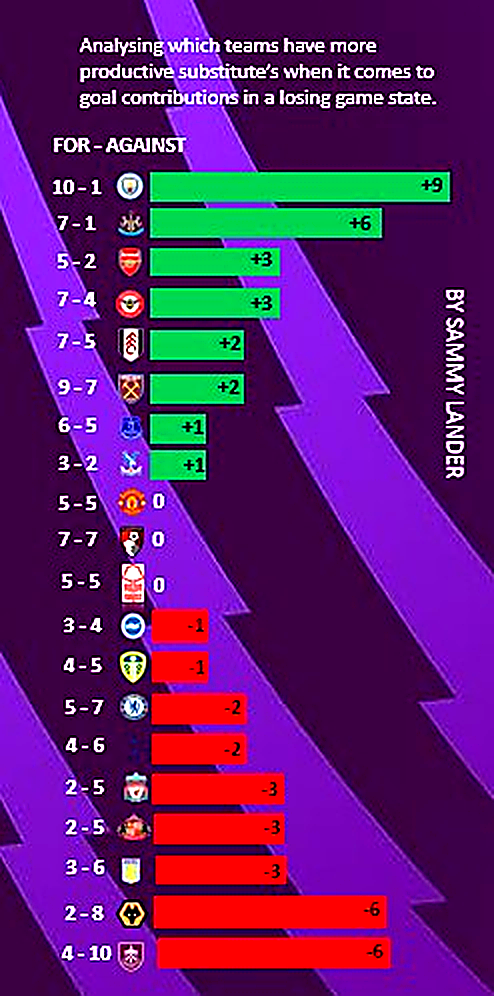
MAN CITY ARE THIS SEASONS STRONGEST STARTERS - IS THIS RELATED TO THEIR WARM UPS?
wHILE SOME TEAMS WHO HAVE BEEN SLOWER STARTERS INCLUDE wOLVES AND bURNLEY.
cRYSTAL pALACE HAVE BEEN THIS SEASONS MOST STABLE STARTERS WITH THE LEAST GOALS SCORED IN THEIR GAMES WITHIN THAT FIRST 20 MINUTES.
ALTERNATIVE METHODS?
I have seen occasional examples of teams deviating from traditional warm-up structures. Brentford were among the first to introduce opposed set-piece rehearsals into their pre-match routine. I’ve also attended a Chelsea U21s game where the warm-up centred around a full team phase of play ending with a shot, rather than the more traditional pass–set–shoot format. Rugby, too, appears further along in adopting more individualised warm-up approaches, with a wider range of methods in use.
Ultimately, this has left me questioning: does a good warm-up correlate with a strong start to a match? Can a poor warm-up derail a good start, while a good warm-up simply goes unnoticed? And, realistically, how important is the warm-up beyond ensuring players are physically ready?
I’m fortunate to be working closely with a range of clubs over the coming months, and I’m eager to explore this further. I’d love to hear thoughts from those who have been in and around the game - particularly on this topic.
What do you think?
bY SAMMY LANDER