A new way of ‘playing out’…
Cesc Fàbregas enjoyed a glittering career as a player and is now writing a compelling new chapter as a manager — one that has already begun impressively. Since moving into first-team management with Como, Fàbregas was interim and then part of the assistant coaching staff that secured promotion to Serie A, before stepping into the head coach role on a permanent basis. He guided Como to a 10th-place finish last season - their best since 1987 - and at the time of writing they sit 6th at the halfway point of the 2025/26 campaign.
While this upward trajectory is impressive in itself, what drew me to Como’s recent performances was something more specific: Fàbregas’ highly unusual and innovative way of building play from deep, and how effortlessly his team are able to progress into the opposition half.
The Playing-Out Structure
Although some within the game remain cautious about ‘playing out from the back’, scrutiny around it has only increased as high-pressing football has once again become fashionable. With more teams adopting aggressive, front-foot pressing structures, the ability to progress through the first third of the pitch has become just as important as the press itself.
While going long can still be effective as a percentage game, coaches such as Fàbregas - and Niko Kovač at Borussia Dortmund - have developed alternative solutions.
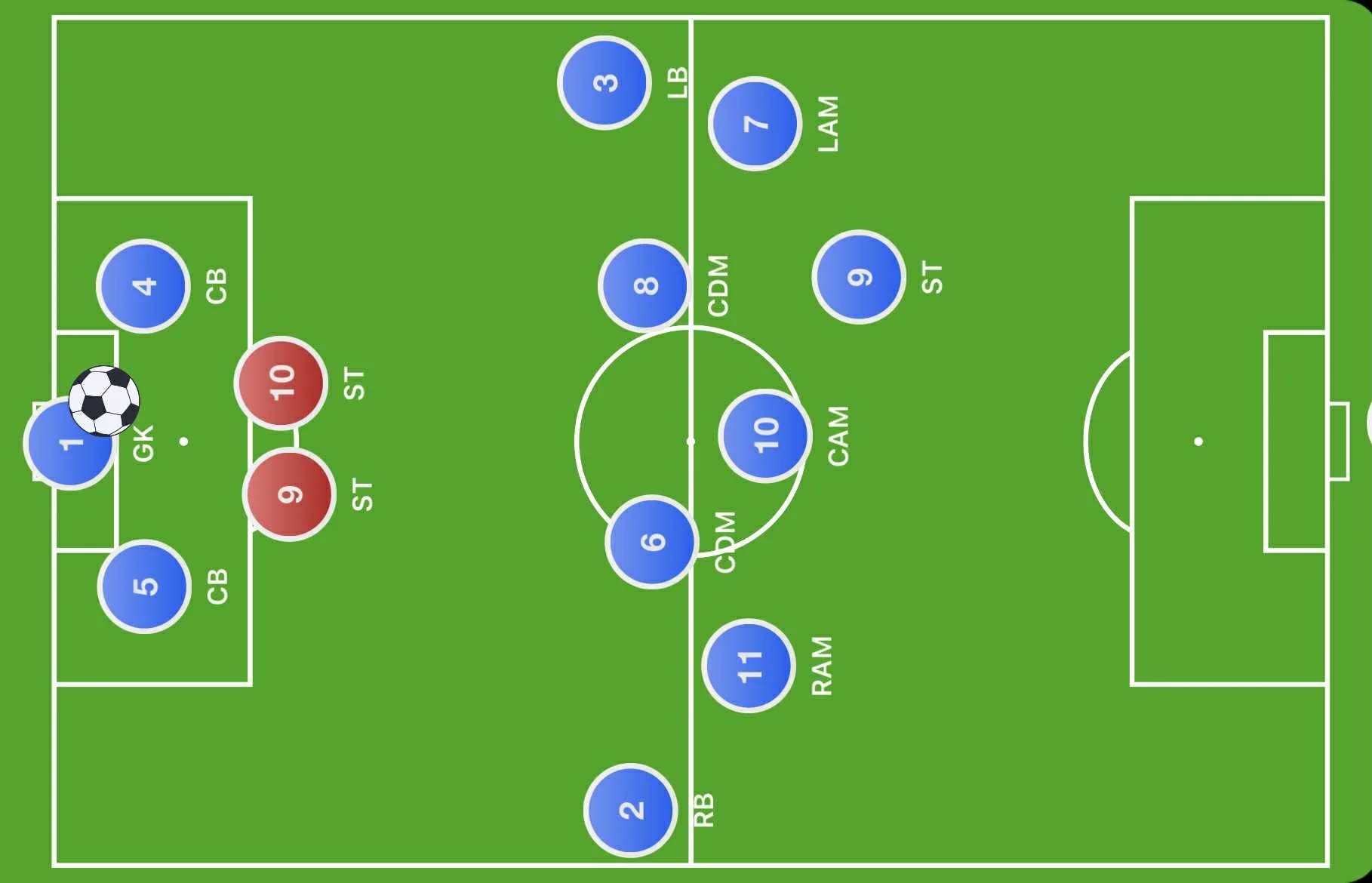
COMO’s structure in their recent games when looking to build up from goalkicks
Como’s structure begins conventionally: a goalkeeper and two centre-backs in their usual positions. But the remaining eight outfield players are positioned on, or beyond, the halfway line. This empties Como’s own half, pins the opposition deep, and stretches the pitch vertically - as shown in the image included in this article.
Most opponents respond by committing two forwards to press the three-man build-up, while the rest of the team drops into a deeper, longer defensive shape to account for Como’s advanced players. The problem is that this creates both a numerical and spatial advantage. With a 3v2 overload and large areas to operate in, Como are able to use rehearsed passing patterns to calmly evade pressure and carry the ball into the opposition half - often with a centre-back driving forward in possession.
Why It’s So Difficult to Press?
So what are the obvious ways to stop it?
If one of the pressing forwards tries to screen a defender with his cover shadow, turning the situation into a 2v2, the amount of space available allows the Como player to simply drift away and reappear as a passing option.
If the opposition commits a third player to press, Como now have a spare man higher up the pitch if they choose to go long - or the option to drop an extra player into the build-up to retain their overload.
If the two pressers narrow to close central access, the full-backs or wide centre-backs can progress freely, forcing a wide defender to jump out and engage - again destabilising the press.
And if none of those happen, the sheer amount of space created allows midfielders to drop into pockets, receive freely, or manipulate the opposition’s pressing shape.
An important enabler of this approach is the modern interpretation of the laws of the game: teams cannot be offside from a goal kick, and opposition players must remain outside the penalty area until the ball is in play. Fàbregas has fully embraced these rules, turning them into a tactical weapon that gives Como a clear edge in their build-up phase.
What Comes Next?
It will be fascinating to see which clubs begin to adopt this strategy - but even more interesting to see who is the first to truly work out how to dismantle it.
Whether it was Fàbregas or Kovač who first brought this idea to life is unclear, but given the success both are enjoying, one thing is certain: they will not be the last.
By Sammy Lander